
Downsizing the Family Home: A Practical Guide to Deciding What Stays
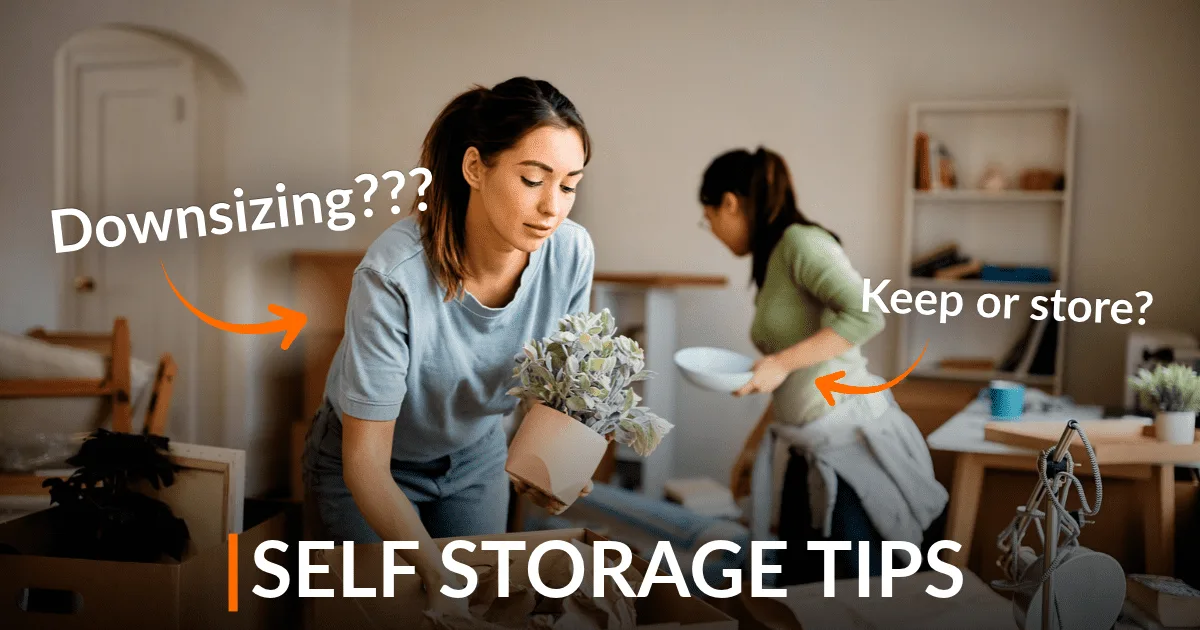
These downsizing tips start with one idea: downsizing a family home is not only a packing exercise. It means deciding which belongings still support your life, which memories deserve protection and which items can serve someone else. A home held for many years usually contains duplicates, inherited pieces, unfinished projects and objects kept for a future that may no longer fit your plans.
Of all the downsizing tips below, the most useful is to separate emotional decisions from space decisions. Begin with the home you are moving into, use the same questions for every item, and avoid forcing permanent choices on a single stressful weekend. Storage can help with genuinely uncertain or valuable belongings, but it should support the decision process rather than replace it.
Start With the Life You Are Moving Towards
Before opening cupboards, list what the next home needs to support. Consider daily routines, working from home, hobbies, visiting family, accessibility, and maintenance. Then record room dimensions, wardrobe capacity, kitchen storage, parking, and outdoor space. These limits turn an overwhelming clear-out into a practical planning exercise.
Measure large furniture and sketch where it could go. If an item has no realistic place or purpose in the new home, it may not be worth the cost of moving it there. A sofa, table or cabinet that suits your old home may not suit the new one. Keep it only if you can name where it will go and how you’ll use it. If something is worth keeping but won’t fit, check which storage locations are convenient for you.
What to Keep When Downsizing: A Five-Way Framework
Here is how to apply these downsizing tips to every item.
- Keep: used regularly, fits the new home and supports your current lifestyle.
- Store: meaningful, valuable or seasonal, but not needed in everyday living space.
- Give: useful items to pass on to family or friends, with an agreed collection date.
- Sell or donate: useful and in good condition, but no longer needed.
- Release: damaged, expired, unsafe, incomplete or unsuitable to pass on.
Give every item a clear outcome. A consistent framework keeps these downsizing tips simple to follow and makes it easier for family members to help
The Questions That Reveal What to Keep in Your New Home
- Do I use it now? Recent use is a better reason to keep an item than a hope of using it later
- Would I replace it? If it disappeared, would you spend money on the same item again?
- Does it fit? Check out the new floor plan, storage capacity, and access points.
- Is the memory in the object? A photograph or written story may preserve it while taking up far less space.
Make the Biggest Decisions Room by Room
Living and Dining Areas
Large tables, display cabinets, lounges, and entertainment units create the greatest space pressure. Keep pieces that suit the new room and the way you entertain now. Occasional gatherings may not justify furniture that dominates the floor plan all year.
Kitchen and Pantry
Reduce duplicate cookware, glassware, appliances and serving pieces. Keep what matches current cooking habits and the new kitchen. Dispose of expired goods, broken containers and appliances that are unsafe or incomplete, and check proper guidance on disposing of them safely.
Bedrooms and Wardrobes
Use the new wardrobe capacity as the limit. Prioritise clothing that fits, is worn, and suits your current lifestyle. Keep a defined number of spare linen sets instead of transferring an entire cupboard by default.
Garage, Shed and Study
Separate active tools, sporting gear, and hobbies from abandoned projects. Review records carefully and retain only essential items that need to be stored. Ensure all items are properly labelled and organised for easy access.
Handle Sentimental Items Without Keeping Everything
Sentimental belongings deserve time, but not every object has equal meaning. Choose representative pieces linked to a person, event, or tradition. Photograph items before they leave, write down their story, and offer family pieces with a response deadline. Never assume relatives want something simply because it has history.
When downsizing a collection, consider whether its value lies in keeping the entire set or just a few meaningful pieces. Choose your favourite items to keep or display, and photograph or catalogue the rest before deciding whether to sell, donate or pass them on. This helps preserve the collection’s memories and history without taking up unnecessary space in your new home.
Create a Downsizing Schedule That Prevents Decision Fatigue
Work in short, defined sessions and finish one category at a time. Start with low-emotion areas such as pantry duplicates, damaged linen, or unused cleaning products. Leave photographs, inherited furniture and family archives until you feel more comfortable making decisions.
Set deadlines for selling items, collecting donations, and getting family responses. Anything without an owner or collection plan by the deadline returns to the decision list. This prevents boxes from sitting in hallways while everyone waits for an answer.
One of the most practical downsizing tips is to work in short, defined sessions and finish one category at a time.
When Should You Use Storage While Downsizing?
Storage is helpful when the new floor plan is not final, a family decision is pending, or a valuable item needs time before a permanent choice. Suitable candidates may include heirloom furniture, photographs, seasonal belongings, labelled archives and keepsakes intended for children or grandchildren.
For each stored item, record why it is being kept, who may want it and when it will be reviewed. Without those details, temporary storage can become a second clutter problem. Clean and dry belongings, label cartons, and keep an external inventory.
If you need somewhere to hold these items while you decide, personal self storage gives you time without crowding the new home.
Choose Storage Based on the Transition, Not the Old House
When choosing storage, the most reliable of these downsizing tips is to estimate space from your final inventory, not the number of rooms you are leaving. Compare storage unit sizes, access arrangements, location and security. Allow retrieval space if family members may collect items after the move. Confirm suitability for sensitive or irreplaceable belongings before booking.
Wallaby Storage has facilities in Moorabbin and Abbotsford. The practical choice depends on the next home, how often access is needed and what will be stored.
Frequently Asked Questions
What is the first step when downsizing a family home?
Begin with the new home and the life it needs to support. Measure the available space before deciding what should move, as this shapes every other downsizing tip.
How do I decide what sentimental items to keep?
Select representative pieces with a clear story, photograph other items and involve family members using a response deadline.
When should I use storage while downsizing?
Use storage for meaningful or valuable belongings when the final decision, owner or floor plan is still unresolved. Give every stored item a review date.
How early should downsizing begin?
Most downsizing tips work best when you begin early enough to work in short sessions and avoid emotional decisions during final packing.
How long should I keep things in storage when downsizing?
Keep items in storage only until you’ve made a final decision about them, ideally within a few months of the move. Keep an inventory, record why you’re keeping each item, and schedule a review after the move. Anything without a clear reason or owner at the review goes back on your sell, donate or release list
Key Downsizing Tips
- Plan from the new home: let available space and future routines guide decisions.
- Use one framework: keep, store, give, sell or donate, and release.
- Protect the story: photograph meaningful items and record their history.
- Set deadlines: family collections and sales need dates, not open-ended promises.
- Use storage selectively: keep only items you have a reason to keep, someone to pass them to or a set date for a final decision.
Ready for the Next Step?
Use these downsizing tips to measure your rooms, sort every item with the five-way framework and put together a final inventory. If some meaningful belongings still need time or space, compare storage locations and talk to our team about a unit that suits what’s left. If you’re ready to ask a question or check availability, you can get in touch with us at any time.
Find the right storage unit for the belongings you’re keeping.


More articles

If you’re a tradie in Melbourne, you know how quickly [...]

Melbourne is one of Australia’s most liveable cities, but like [...]

With insurance premiums rising, tool theft spiking, and vehicle costs [...]
"You made selecting a storage unit and setting up an account so smooth"
"Thank you for your outstanding service recently. You made selecting a storage unit and setting up an account so smooth, efficient and professional that it was simple and reduced my stress significantly. Looking forward to a wonderful experience now that I’m decluttering my life using your facilities!" - Sue W.
“Easy and seamless”
"Thanks for all the personal service, and for taking care of the move-in. It can get so stressful when moving. Michaela was great and made sure it was easy and seamless. I recommend the Wallaby Storage team." - Gayle S.
“Such personal help and service”
"Such good access, and such personal help and service. Thanks Wallaby Storage for making it so pleasant, and especially the comps coffee at Morris Moor. So easy. Thank you." - Alec S.
"Secure and convenient"
Michaela was very helpful and answered all of our questions. Michaela's friendly demeanour and communication made our choice of storing our stuff at the facility easier. The facility is easy to access and is secure and clean - Geraldine S.
"Clean, neat and tidy"
The access to the facility is easy and the storage unit areas inside are very clean, neat and tidy. Michaela was a wonderful assistance, very pleasant and friendly and I would highly recommend – Simon B.
"I highly recommend Wallaby Storage"
"I highly recommend Wallaby Storage. Michaela proved instrumental in swiftly identifying a storage unit that not only met my space specifications but was also well-suited for securely housing all my belongings. Notably, Michaela presented me with various options that aligned with my budgetary constraints. The facilities at Wallaby Storage significantly eased this burden. The well-designed facilities simplified the unloading and transportation of items to the storage shed, contributing to a seamless experience. Moreover, the cleanliness of the facilities added to the overall positive impression. I wholeheartedly endorse Wallaby Storage and am grateful for making an informed choice in entrusting the storage of my family's belongings to their facilities." - Clayton W.

